As the Inclusioneering team reflects on the past year, we’re grateful for another year of progress, partnership and purpose.
This year also marked a milestone – our fourth birthday. Since Inclusioneering was launched, we’ve had the privilege of collaborating with businesses, organisations, and leaders across engineering and technology to embed meaningful DEI practices and help build resilient, thriving teams.
2025 also brought new opportunities to connect with professionals across the UK’s tech and engineering landscape.
Large-scale projects
Inclusioneering led the data analysis and reporting for the Royal Academy of Engineering and Science Council’s EDI Progression Framework benchmarking. The project assesses the maturity of EDI practice across Professional Engineering Institutions and Science Bodies in 10 areas of professional body activity.
The team also delivered Inclusive Innovation training workshops for businesses supported by the CoSTAR National Labs, a UKRI Arts and Humanities Research Council–funded national R&D network that supports creative technology SMEs and strengthens the UK’s world-leading creative industries.
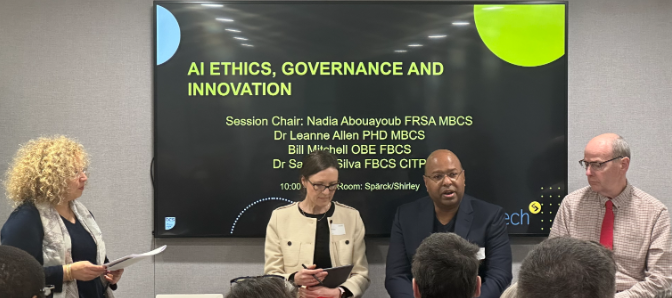
Image above: Panel discussion at BCS Convene Conference
Small but impactful engagements
Following the King’s Speech announcement in 2024 that Ethnicity Pay Gap reporting would become mandatory for large businesses, Jo worked with Change the Race Ratio to write their policy briefing on this topic.
Working with a Midlands NHS Trust developing their first AI Strategy, the Inclusioneering team was also invited to lead a workshop on responsible AI as part of a larger co-creation process to gain inputs from stakeholders across disciplines (clinical and non-clinical) for the strategy.
Part of this project included reviewing and giving feedback on the strategy document to support its preparation for senior leadership approval. This strategy will shape responsible adoption of AI across the trust.
Inclusioneering also led two projects with the University of Leeds. The first was a COIL-Ed Spring event, bringing academics together to share experiences of collaborative online international learning and to co-design new international learning experiences for students.
The second was at the ExperienceEd conference where we shared the COIL knowledge of building cross-cultural collaboration in international teams, with student-led innovation for sustainability.
The project team included staff, students, and Jo speaking about our COIL project which took place in 2024 with 180+ students across 3 continents, from 5 universities, 8 courses.
We also delivered inclusive facilitator training for Cambridge BAST’s WE Lead Food course facilitators, supporting a collective leadership model that enables women in the food sector to connect, collaborate and co-create in environments where women leaders can thrive.
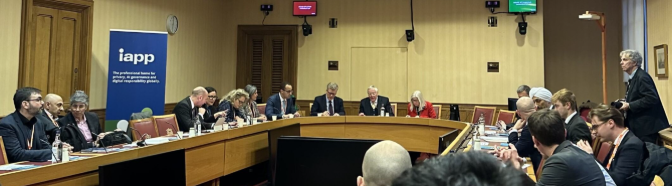
Image above: APPG (House of Lords)
Policy influence
Jo collaborated with Karen Blake and a team of experts on the Diversity in UK Tech report for the Department of Science, Innovation and Technology, exploring barriers faced by underrepresented groups across industry, entrepreneurship and skills, and offering evidence-based recommendations.
Support was also provided through contributing evidence to, and reviewing, the APPG on STEM paper on Data collection paper on data collection, insight and analysis for diversity and inclusion in Science, Technology, Engineering and Mathematics.Advocacy became especially vital following the UK Supreme Court decision on 16 April 2025, which ruled that the legal definition of ‘woman’ under the Equality Act refers to biological sex.
In a climate where trans people face increased hostility, Inclusioneering collaborated with organisations that support women across social enterprise, technology, and community arts to share our concerns with MPs, the Equalities Office, and the Equality and Human Rights Commission (EHRC).
We submitted a response to the EHRC consultation on changes to equality guidance, and spoke with our MPs raising important questions about the reliance on AI to analyse over 50,000 submissions and the risk of losing nuance in such a critical discussion. The recent announcement by Girlguiding and WI which excludes girls/women highlights the importance of inclusion and allyship.
Notable speaking engagements:
Inclusioneering took part in a range of events focused on equality, inclusion, and the responsible use of technology, including the PICTFOR EDI Rally, where Jo spoke about how the industrial strategy and innovation ecosystem must embrace EDI.
We also attended The Birmingham AI Summit. Jo’s keynote explored Trustworthy AI: How we can harness the benefits while minimising the risks At World of Work Cambridge, Jo led a roundtable discussing the responsible use of AI.
Our engagement continued at the Institute of Materials, Minerals and Mining M3P3 conference: Diversity, skills, and the vital role of professional communities, as well as One Tech World – AI for Everyone: Women Shaping AI Adoption panel discussion, and the Women in Manufacturing conference: The Agile Inclusion Paradox.
Voluntary projects and events:
We were delighted to support BCS Women and the BCS Edinburgh Branch with their event ‘Exploring CITP: Perspectives on the Pathway to Becoming Chartered’, which helped to highlight professional development and chartership routes.
Inclusioneering also contributed to the BCS Convene Conference in London, where Jo played a key role in organising a panel focused on unlocking potential and meeting the skills demands of an evolving profession.
In April, the House of Lords hosted the All Party Parliamentary Group (APPG) specifically discussing AI. The event was hosted by Lord Tim Clement-Jones and Allison Gardner MP, and featured key speakers from the privacy, data governance, and AI ethics sectors.
Inclusioneering also attended the launch of research by Open Inclusion about AI and disability, the launch of the Lovelace Report, as well as represented ForHumanity at the AI Standards Hub Global Summit.
Championing underrepresented voices remained at the heart of our mission. To celebrate International Women in Engineering Day, the team also co-hosted a special event for secondary school children with BCS Women and Raspberry Pi, highlighting the achievements of women in engineering and the importance of widening participation in STEM.
Jo also represented BCS Women to highlight their recommendations for the BCS Gender Diversity in the Tech Sector Report 2025. The report paints a clear picture of where we are and where we still must go.
Women now make up 22% of UK IT specialists, up slightly from last year. But to match the wider workforce, there would need to be 530,000 more women in tech roles today.
Half-million missing women isn’t just a statistic – it’s a missed opportunity for innovation and a tech workforce that reflects society.
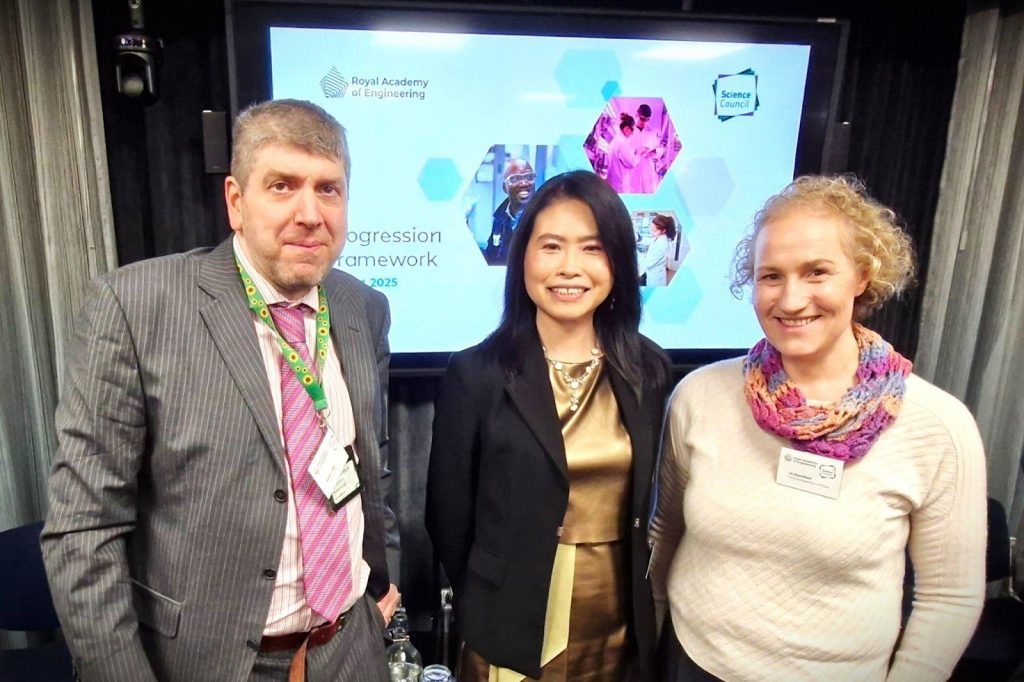
Image above: Martin, Annie and Jo from the Inclusioneering team
Looking Ahead
As we enter the next chapter of Inclusioneering, we remain committed to driving impact with diversity, equity, and inclusion across engineering and technology.
We are energised by the partnerships forged this year, the communities we’ve joined, and the collective action that continues to inspire us.Thank you to the Inclusioneering team – Jo, Julia, Martin, Annie, Amy and Carrie as well as everyone who has supported us, partnered with us, or joined our growing community.
Here’s to continued collaboration, courageous conversations and meaningful impact in the years ahead.